
Research Highlight | Understanding the Link Between Credit Risk and Profitability in Nepalese Commercial Banks
Mr. Kritesh Koirala | MBS Alumnus | Academia International College
How does credit risk influence the profitability of commercial banks? This important question is at the centre of the research conducted by Mr. Kritesh Koirala, an alumnus of the Master of Business Studies (MBS) programme at Academia International College.
His research examines the relationship between credit risk and profitability in Nepalese private commercial banks, focusing on two major banking institutions: Nabil Bank Limited (NABIL) and Global IME Bank Limited (GIBL).
Using ten years of secondary financial data covering fiscal years 2014/15 to 2023/24, the study applies quantitative research methods, including descriptive statistics, correlation analysis, and multiple regression analysis, using SPSS and Microsoft Excel.
The research examines five key credit risk indicators: Capital Adequacy Ratio (CAR), Non-Performing Loan Ratio (NPL), Credit-to-Deposit Ratio (CDR), Loan Loss Provision Ratio, and Earnings Per Share (EPS). Bank profitability is assessed through Return on Assets (ROA) and Return on Equity (ROE).
Key Research Findings
The comparative analysis reveals interesting differences between the two banks:
-
Nabil Bank Limited generally demonstrates superior capital adequacy and profitability, although with higher volatility. Its profitability is significantly influenced by the Capital Adequacy Ratio.
-
Global IME Bank Limited demonstrates comparatively stable performance and greater consistency in credit risk management. Its profitability is more affected by credit risk factors such as the Credit-to-Deposit Ratio.
-
The correlation and regression analyses identify significant relationships between credit risk indicators and profitability measures, with variations across the two banking institutions.
Why This Research Matters
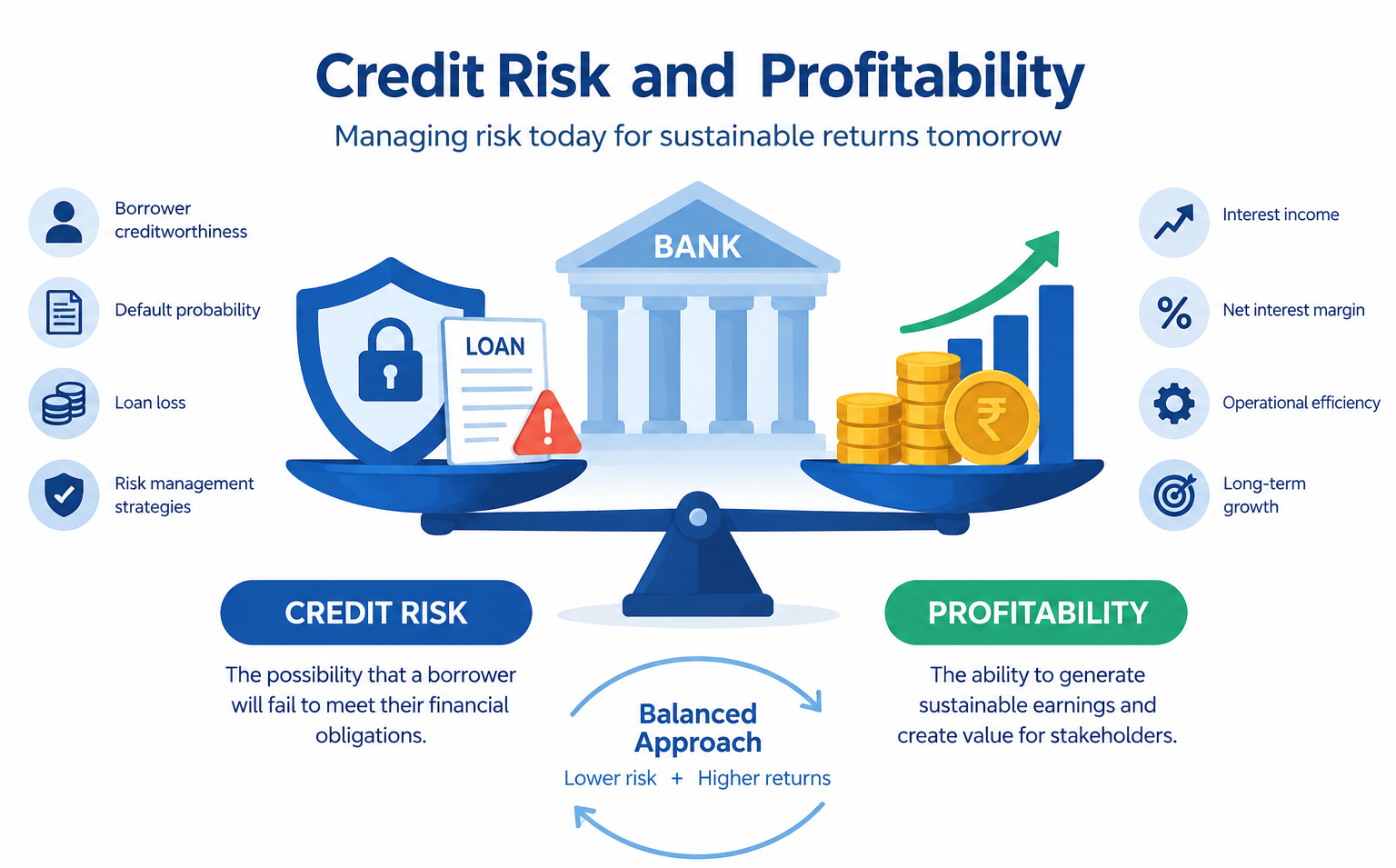
The study highlights the importance of effective credit risk management in maintaining sustainable financial performance. It provides insights into how different dimensions of credit risk influence banking profitability and why financial institutions need to balance risk exposure with expected returns.
By investigating actual financial data from Nepalese commercial banks, this research contributes to a better understanding of banking performance, financial risk management, and strategic decision-making in Nepal's banking sector.
Researcher: Mr. Kritesh Koirala
Academic Programme: Master of Business Studies (MBS)
Research Domain: Banking and Finance
Study Period: 2014/15–2023/24
Research Methods: Descriptive Statistics, Correlation Analysis and Multiple Regression
Research is about asking meaningful questions, analysing evidence, and generating insights that contribute to better decisions.
